

Malachi 1:6-14
The priests confronted in Malachi 1 did not wake up one morning and decide to insult God. Nobody does. They drifted there. One blemished sacrifice at a time, offering God their leftovers slowly started to feel normal.
Malachi is the last word of the Old Testament, and by the time God speaks through him, the crisis is long over. The exiles had returned from Babylon and rebuilt the temple. Worship was running again, business as usual, more than 85 years running. This is not a book about people who lost everything and are struggling. It is a book about people who got everything back and grew cold.
That is the real subject of this message. Not what you do not have. What you are not willing to give, once the fire that used to make giving your best feel natural has gone out.
Malachi was written around 430 BC, more than eight decades after the exiles returned from Babylon and rebuilt the temple. This was not a nation still recovering from disaster. The crisis had passed, the temple was standing, and the system was running again.
That is what makes the book sting. The danger does not only show up in our wilderness seasons. It shows up in our settled seasons, when the fire that used to matter starts to feel ordinary. Their miracle became routine, their altar a formality, their sacrifice mundane.
Here is what is easy to miss about the priests God confronts in Malachi. They are the literal descendants of Aaron, the men Leviticus 6:13 charged with keeping the altar fire burning day and night. Their job, generations later, was still to tend that fire. They were still going through the motions of maintaining it.
But the men doing the tending had gone cold themselves, and it showed up in what they were willing to lay on that altar. The outward function survived long after the heart behind it left. These were not pagans or outsiders. They were the very men charged with handling what is holy, and over time, they had gotten comfortable cutting corners with it.
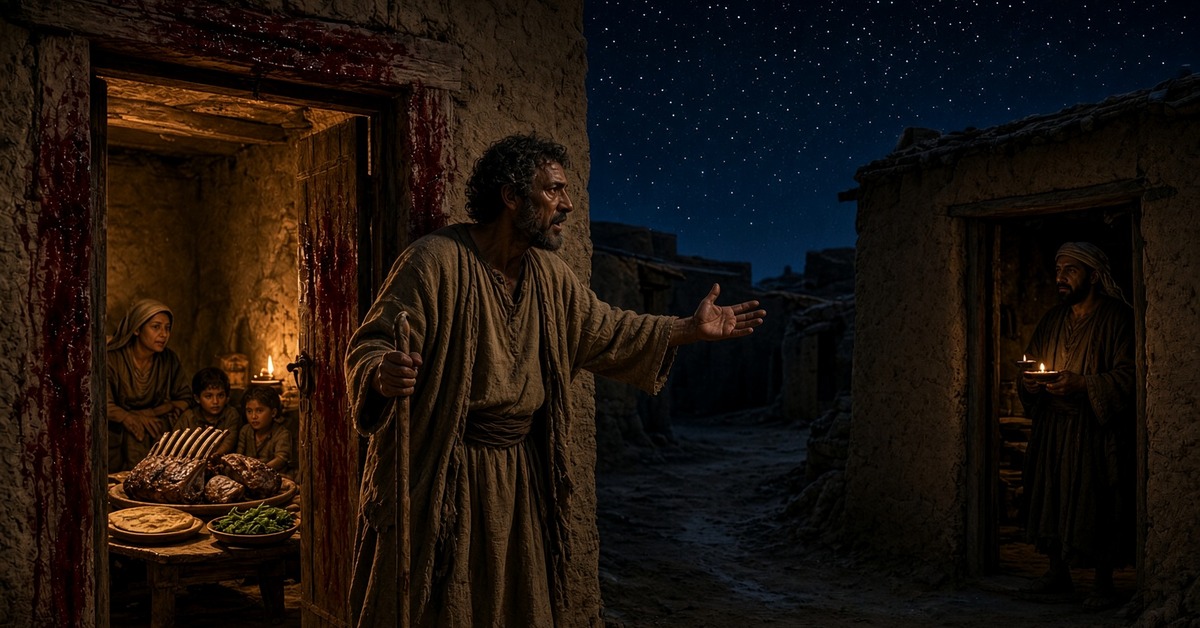
God's charge against His people is specific. They were offering Him animals that were blind, lame, and sick, the kind of blemished sacrifice the Law explicitly forbade. Under Leviticus 22, an offering with a blemish was not a lesser gift. It was a rejected one. It never even counted as worship.
God puts the test plainly:
"And if ye offer the blind for sacrifice, is it not evil? and if ye offer the lame and sick, is it not evil? Offer it now unto thy governor; will he be pleased with thee, or accept thy person? saith the LORD of hosts" (Malachi 1:8).
Nobody hands their governor a broken-down, half-blind animal when they are hoping to make an impression. People save their best for someone whose opinion actually matters to them. That is exactly what God's people were doing to Him. A blemished sacrifice on the altar was not hidden. It was visible, measurable, right there for anyone to notice.
Verse 14 is where the whole message turns.
"But cursed be the deceiver, which hath in his flock a male, and voweth, and sacrificeth unto the Lord a corrupt thing" (Malachi 1:14).
Read that carefully. The man God curses in this verse had the good animal, a male without blemish, right there in his own flock. He vowed it to God. Then he swapped it out for something corrupt.
This was not a man who was poor and could only afford a blemished sacrifice. This was a man who had the best, and chose deliberately to withhold it.
That single detail changes everything about how you read this book. Malachi is not confronting people who have nothing to give. He is confronting people who have plenty, and simply decided God was not worth their best anymore.
Nobody today is literally walking a lame sheep up to an altar. But the same instinct shows up in quieter forms. God gets whatever is left of our time after work, hobbies, screens, and everyone else has already had their turn. Service works the same way. We show up when it is convenient, and the moment it costs us something, the excuses start. Worship can look right on the outside while we are bored in spirit, present in body and absent everywhere else. And when it comes to giving, God gets the leftover of the budget instead of the firstfruit of it.
It is the same pattern behind what I wrote about half-hearted faith in Are You a Secret Disciple? A secret disciple holds back their name. Someone offering God a blemished sacrifice holds back their best. Both are the same instinct wearing a different face: give God enough to say you gave, and keep the rest for yourself.
Would you hand this offering, this half-hearted, distracted, leftover version of your time and worship, to someone you were actually trying to impress? If the answer is no, that tells you something about what you have just handed to God.
Every blemish law in the Old Testament pointed somewhere. Peter tells us we were redeemed "with the precious blood of Christ, as of a lamb without blemish and without spot" (1 Peter 1:18-19). When Pilate examined Him, he could only say, "I find no fault in Him." To reach a lost world, God did not offer leftovers. He gave His best.
Paul takes that same picture and turns it into a personal charge. Under the old system, the worshiper brought an animal to stand in for himself, not a blemished one, but a choice one. Now Paul says bring yourself instead, not a half-hearted self, not a worn-out self because you have given your all to everything else but God, but your whole self, your best self.
"I beseech you therefore, brethren, by the mercies of God, that ye present your bodies a living sacrifice, holy, acceptable unto God, which is your reasonable service" (Romans 12:1).
This is not a message about what you do not have. It is a message about what you are not willing to give, once the fire that used to make giving your best feel natural has gone out.
Oswald Chambers titled his life's devotional My Utmost for His Highest. Nearly a century later, that is still the question every blemished sacrifice tries to dodge.
God is not asking for your upmost. He is asking for your utmost.
Pastor Matthew Ball serves as lead pastor of Faith Apostolic Church in Carmel, Indiana. This post is adapted from his message “Blemished,” preached August 30, 2026.