
Matthew 3:11
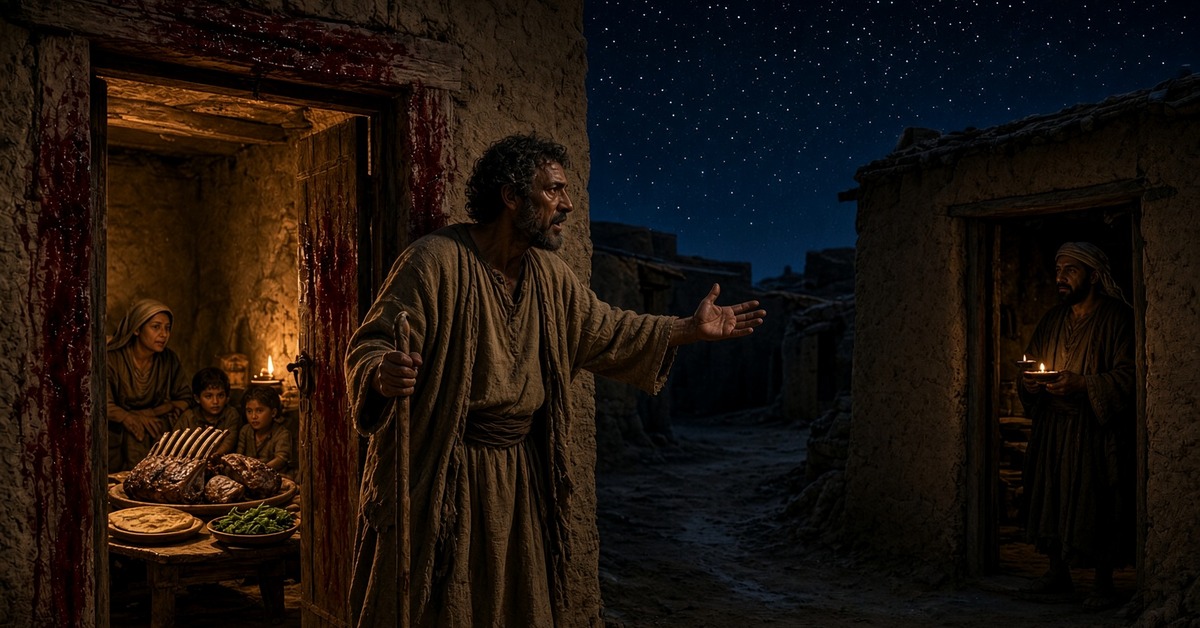
John the Baptist stood in the Jordan River, calling the nation of Judea to repentance. Crowds came from Jerusalem and beyond, confessing their sins, being baptized in the muddy water. But John told them plainly that his baptism was only the beginning. "I indeed baptize you with water unto repentance," he said, "but he that cometh after me is mightier than I… he shall baptize you with the Holy Ghost, and with fire" (Matthew 3:11). What every believer needs, and needs again, is fresh fire.
Three years later, that promise ignited in an upper room in Jerusalem. Two thousand years later, the same fire is still available to anyone who will ask for it. But here is what most of us learn the hard way: fire does not stay lit on its own. It has to be tended, guarded, and renewed, or it grows cold no matter how hot it once burned.
The Holy Ghost does not just come into your life. He sets your life ablaze, and He expects you to keep it that way.
When John said Jesus would baptize with the Holy Ghost and fire, he was not offering a poetic flourish. He meant it. The fire of God's Spirit does two things at once. It purifies, and it consumes.
It purifies the way John described in the next verse, burning away the chaff and leaving the wheat (Matthew 3:12). Paul used the same picture with the Corinthian church, describing a fire that burns away wood, hay, and stubble, leaving only gold, silver, and precious stones (1 Corinthians 3:12). The fire of the Spirit refines a life. It burns off what should never have been there in the first place and leaves behind something valuable enough to be called holy.
But the fire of the Spirit is not only refining. It is consuming. "Our God is a consuming fire," Hebrews 12:29 declares. Consuming means all of you, not a portion. God does not settle for a corner of your life. He will not be relegated to a Sunday morning time slot or a bumper sticker confession. Lord of all, or not Lord at all. There is no in between with a consuming fire.
That is also why the evidence of the Spirit is always visible, even though the Spirit Himself is invisible. Jesus told Nicodemus the Spirit moves like the wind: you cannot see it, but you can see what it does (John 3:8). You cannot see the Holy Ghost enter a man or woman. You can absolutely see the fire that follows. That is what makes the phrase secret disciple a contradiction. Nobody stays hidden after they have been baptized with fire.
Acts 2 fulfilled John's prophecy. Tongues of fire rested visibly on the heads of the hundred and twenty gathered in the upper room, marking the moment as the fulfillment of what John had promised (Acts 2:3-4). The rest of the book of Acts never repeated the visible flame, but it never lost the fire itself. Ordinary men and women gave themselves wholly to the cause of Christ, and the result reads like a church that could not be talked out of its own zeal.
Peter preached with such boldness that three thousand souls turned to Christ in a single day. He looked at a lame beggar at the temple gate and said, "Silver and gold have I none; but such as I have give I thee: In the name of Jesus Christ of Nazareth rise up and walk" (Acts 3:6). And the man walked. Religious leaders arrested the apostles for preaching, an angel released them from prison, and they went straight back to the same synagogue to keep preaching. Believers sold their possessions and laid the proceeds at the apostles' feet so the gospel could spread further. A mob stoned Stephen for his testimony, and he would not recant with his dying breath.
That is not the behavior of people who are merely committed. That is the behavior of people who are on fire.
The Acts church prayed, preached, witnessed, and served with a fervor that turned Jerusalem and Judea upside down. They counted persecution as joy. They loved not their lives even unto death. Every chapter reads like a people who had been baptized with fire and had not yet let it cool.
Here is where the story gets uncomfortable. Read only the book of Acts and you would assume the fire of the early church never wavered. Turn to the epistles, though, and a different tone emerges. Paul told the Roman church to stay "fervent in spirit" while serving the Lord (Romans 12:11). He told the Colossians to do everything they did "heartily, as to the Lord" (Colossians 3:23). And Jesus Himself told the church at Ephesus, "I have somewhat against thee, because thou hast left thy first love" (Revelation 2:4).
That should stop you. These were not warnings to unbelievers or to some cold, dead congregation. These were the same kind of believers who had sold their possessions and preached in the face of prison. Somewhere between the boldness of Acts and the letters that followed, the fire had started to fade.
Time explains the gap. Paul wrote to the Colossians roughly twenty seven years after Pentecost. He wrote to the Romans about twenty two years after the wind and fire of the Holy Ghost had turned their world upside down. Jesus spoke to the Ephesians more than fifty years after their own upper room experience. The longer these believers walked with God, the more they needed to be reminded not to lose their fire.
God gave Israel a picture of this centuries earlier. He commanded that the fire on the altar in the tabernacle "shall ever be burning… it shall never go out" (Leviticus 6:13). That fire originated with God Himself, falling from heaven to consume the first offering (Leviticus 9:24). Divine origin did not exempt it from needing maintenance. Every morning, the priests removed the ashes and added fresh wood. Even a fire that started with God required daily tending, or it would have died like any other fire.
That is simply the nature of fire. Left alone, it dwindles. Given enough time, it always grows cold. This is not unique to spiritual passion. It is human nature. A new phone excites you for a few months, and then you want the newest model. A new relationship, a new job, a new season, all of it burns bright at first and requires intention to keep burning. If that is true of ordinary things, how much more does it apply to our walk with God?
Brand new converts rarely need to be told this. Someone six months removed from a broken life, freshly saved and delivered, does not need a sermon about staying on fire. Their baptism of fire is still fresh. But most of us are further down the road. We are the Colossians, decades removed from our own upper room. And decades in, the temptation is to call our coldness maturity instead of calling it what it is.
Do not call your rut maturity. Do not call lukewarmness growing up.
Jesus is still knocking. "Behold, I stand at the door, and knock: if any man hear my voice, and open the door, I will come in to him, and will sup with him" (Revelation 3:20). That verse is often applied to the unbeliever, and rightly so in a broader sense. But read the context. Jesus spoke those words to the church at Laodicea, a congregation that had once been on fire and had grown lukewarm. He was not knocking on the door of someone who had never known Him. He was knocking on the door of people who used to burn for Him and had let the fire fade.
Today He is still taking the temperature of His church. The temperature of our worship. Our prayer lives, our devotion to the Word, and our faithfulness and consecration. If your answer is lukewarm, do not panic and do not pretend. Ask for fresh fire.
David prayed for exactly that after his own failure: "Restore unto me the joy of thy salvation" (Psalm 51:12). That is a prayer for fresh fire, and it is available to you the same way it was available to him. Remember how you worshipped the week you came out of your own upper room. Remember when you did not care what anyone thought of you in church. And remember when you were glad, not obligated, to go to the house of the Lord. That is not something you are meant to outgrow. That is something you are meant to keep.
God is not asking you to manufacture an emotion. He is offering fresh fire to anyone willing to open the door.
Where is your fire today? Ask God for fresh fire, and watch what He does with the rest of your life.
Pastor Matthew Ball serves as lead pastor of Faith Apostolic Church in Carmel, Indiana. This post is adapted from his message “Fresh Fire,” preached August 16, 2026.