

Moses was one of the most effective leaders in the entire Old Testament, chosen by God to deliver Israel out of Egypt. But even Moses struggled with something every leader, every parent, and every believer eventually wrestles with: learning to tell the difference between great matters and small matters.
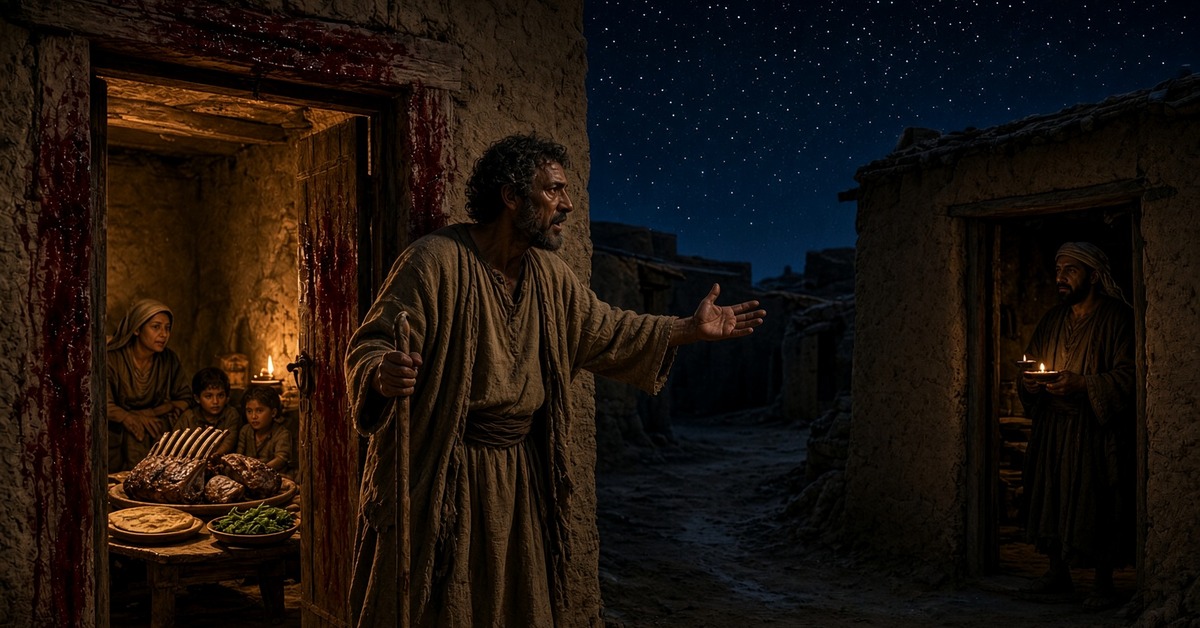
By the time his father-in-law Jethro came to visit, Moses was sitting from sunrise to sunset, judging the disputes of several million people, one at a time. The people lined up all day waiting for him. Moses grew weary. The people grew weary. Nobody was getting what they actually needed.
Confuse a great matter for a small one, or a small matter for a great one, and you will wear yourself out, wear everyone around you out, and still miss what actually matters.
Jethro watched his son-in-law run himself into the ground and asked him plainly: what are you doing? Moses explained that the people came to him for spiritual guidance, and he judged their situations one by one. Jethro told him this was not good leadership. He was wearing himself out, and he was wearing the people out right along with him.
Jethro gave Moses two pieces of counsel. First, teach the people the Word of God. “Thou shalt teach them ordinances and laws, and shalt shew them the way wherein they must walk, and the work that they must do” (Exodus 18:20). If people know the Word and know how to apply it, a lot of their problems solve themselves before they ever reach your office. Second, raise up capable men to handle the smaller disputes, rulers of thousands, hundreds, fifties, and tens, so that only the truly great matters would come to Moses himself.
These are two of the best leadership principles in the Bible. But they leave one question unanswered, and it is the question that matters most.
Jethro told Moses to handle the great matters and let his new leaders handle the small ones. He never told him how to tell them apart. That is the harder skill, and most of us never quite master it.
A great matter is something weighty, something of real consequence, a decision that shapes the direction of a life. A small matter is something of lesser significance, sometimes even something frivolous, not worth the stress we give it. Confusing the two is where people get into trouble.
You know the phrase “making a mountain out of a molehill.” Someone treats a small matter like it is a great one. They lose sleep over something that, honestly, should never have cost them an hour of peace. Most of us have done this. We have let something small dictate how we spent our week, our energy, sometimes our joy.
But I think there is something just as dangerous happening in the other direction. Call it making a molehill out of a mountain. This is taking something that truly is significant, something that carries real weight, and treating it like it does not matter. This is the person who needs someone to say, “Hey, you should be far more focused on this than you are.”
Learning to separate great matters and small matters is not optional if you want your life, your family, and your ministry to count for something.
What matters most in life is knowing what matters most.
My father was a pastor named David Ball. It has been almost thirty years since he passed away at the young age of fifty-four, and I still miss him. I will never forget the conversations we had near the end of his life, him sitting in his tilt-back chair wrapped in a blanket, both of us talking.
When you are approaching the close of your life, some things stop concerning you entirely. Eternity knocking on the door has a way of revealing exactly what is a great matter and what is a small one. Our conversations in those final weeks were not about sports, the stock market, politics, his law practice, or some old grievance he was still carrying. We talked about God, eternity, the church, my calling, our family. We talked about the Kingdom, and about Faith Apostolic, and its future.
I am grateful my father knew what really mattered long before he reached his final days, and that he lived his whole life according to that knowledge. Some people wait until they are on their deathbed to figure this out. They spend decades consumed with the trivial, and only an existential crisis wakes them up to the truth that some things were never worth their attention in the first place.
Here is what I want to challenge you to do. Take your whole life and divide it into two columns: great matters and small matters. In the great matters column, place the things that must never be neglected. In the small matters column, place everything else.
Great matters include God, your relationship with Him, your soul, your eternal destiny, your character and integrity, your calling, your marriage, your children, and passing a spiritual heritage on to them. Great matters include your commitment to your local church.
Small matters include the car, the boat, the vacation, the house, the clothes. That grudge you are still nursing over something someone said or did to you years ago? Small matter. So is whether you got the recognition you felt you deserved, whether someone else got the position you wanted, or whether the preacher forgot your birthday. I know “church hurt” has become a common phrase, and I understand the pain behind it, but nobody talks about “school hurt” or “job hurt.” We have all been hurt somewhere. Drive on anyway. What that person did to you thirty years ago, or three weeks ago, belongs in the small matters column.
Give your best to what belongs in the great matters column. Keep it front and center. Most of what lands in the small matters column deserves to be laid down, surrendered, released, not given one more ounce of your attention. None of it is necessarily wrong. A hobby, a leisure activity, none of that is sinful in itself. But the moment any of it distracts you from the great matters, it needs to go. You have a race to run.
Moses never solved his problem by working harder. He solved it by learning to sort what was in front of him: teaching people the Word so smaller issues never had to reach him, raising up leaders he trusted to carry what he no longer needed to carry himself, and reserving his own attention for what actually required it.
Sorting out great matters and small matters has to happen in your life and mine too, not just in Moses’s. Some of what you are carrying right now does not belong in the great matters column, no matter how loud it feels today. And some of what you have been neglecting, telling yourself it can wait, may be one of the great matters God is asking you to finally give your full attention. Learning to set your face in the right direction starts with knowing which matters deserve your face turned toward them at all.
Get your family’s matters in the right column. Do the same for your church’s matters. And above all, get your soul’s matters in the right column.
What matters most is knowing what matters most.
Which column is your life really living in?
Pastor Matthew Ball serves as lead pastor of Faith Apostolic Church in Carmel, Indiana. This post is adapted from his message “Great Matters and Small Matters,” preached May 1, 2026, at the Apostolic Heritage Conference.